Source High Simulation Artificial Olive Tree for Garden Hotel Cafe
Find 30 listings for the High Simulation Artificial Olive Tree suitable for indoor and outdoor decoration. Buyers can compare models like AOT-22 and AOT-5, noting variations in materials such as metal and plastic, along with customization options and lead times from suppliers in China.
Key considerations
Products List


$960.00 - $980.00
MOQ: 1 Pieces


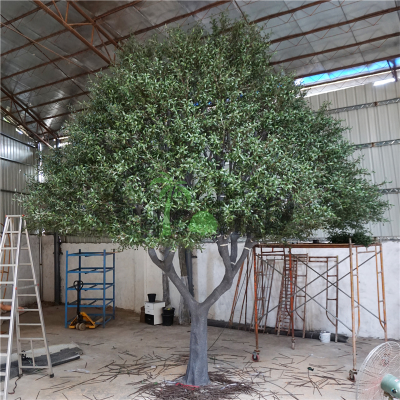
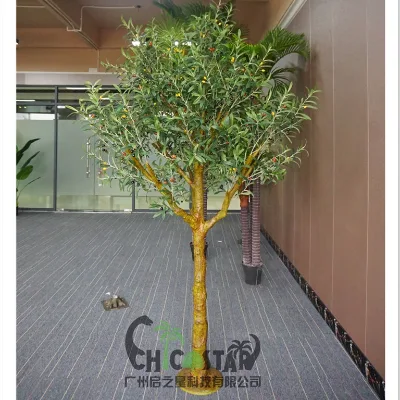

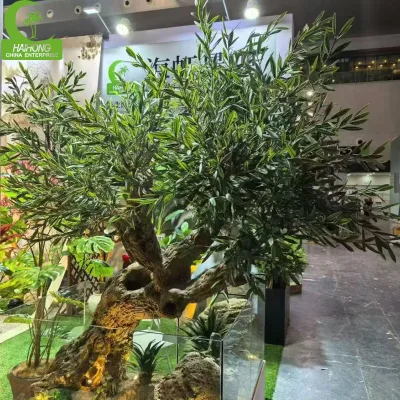

Comprehensive Sourcing Guide
Strategic Sourcing Guide for High Simulation Artificial Olive Trees
Procuring high simulation artificial olive trees requires a nuanced understanding of the intersection between aesthetic fidelity, structural engineering, and supply chain logistics. These products are frequently utilized to replicate the organic elegance of real olive trees in environments where natural growth is impossible or impractical. The market offers a diverse array of options ranging from handcrafted pieces to machine-assisted units, each with distinct implications for cost, durability, and visual impact. This guide synthesizes available product attributes and industry standards to provide a framework for buyers evaluating potential suppliers and products.
Technical Specifications and Material Composition
The core differentiator for high simulation artificial olive trees lies in the material composition and the manufacturing process. Based on observed product data, the market presents a dichotomy in materials, with options available in both metal and plastic constructions. Metal-based models often feature an internal skeleton designed for structural integrity, particularly for larger units, while plastic components are frequently used for the foliage and branch textures to achieve a natural look. The surface treatment of these products often involves printing techniques to apply realistic color gradients and vein details to the leaves, enhancing the "high simulation" quality.
The manufacturing process is a critical technical specification. Data indicates that production methods vary between "Handmade" and "Handmade+Machinery" approaches. Handmade processes typically allow for greater customization in branch positioning and leaf density, resulting in a more organic appearance. Conversely, the integration of machinery suggests a focus on consistency and scalability, which may be preferable for large-scale commercial deployments. Buyers must verify the specific balance of these methods for any given unit, as the ratio of manual labor to machine automation directly influences the final texture and realism of the tree.
Furthermore, the structural design often adheres to specific model numbers such as AOT-1, AOT-2, AOT-3, AOT-5, and AOT-22, or generic designations like O01. These models likely correspond to different height configurations, trunk diameters, and canopy spreads. For instance, specific listings reference a height of 3 meters or 6 meters, with trunk heights varying accordingly. The shape is generally described as "as Photo," indicating that the physical product should match the visual representation provided in marketing materials. However, buyers should treat these descriptions as observations of specific listings rather than universal guarantees, necessitating a review of actual product samples or detailed technical drawings before finalizing an order.
Compliance, Certification, and Safety Standards
When sourcing artificial greenery, compliance and safety standards are paramount, particularly for products intended for public spaces, hotels, and weddings. The observed product attributes indicate that fire resistance is a variable attribute, with some listings explicitly stating "Non-fire Retardant." This is a critical compliance point for buyers. In many jurisdictions, public venues such as hotels, cafes, and wedding halls require all decorative items to meet specific fire safety codes, often mandating fire-retardant treatments.
Buyers must verify the fire rating of any artificial olive tree prior to purchase. The absence of a "fire retardant" label in a product description should trigger a request for independent test results or certification documentation from the supplier. While some products may claim to be "High Quality," this is a general marketing observation and does not substitute for verified safety data. Additionally, the production standards are listed as "customized" or "customized size," which implies that the product may not adhere to a single, universal international standard. Instead, the supplier may be manufacturing to the buyer's specific requirements or local regulations.
It is essential to confirm whether the materials used, such as the metal frames or plastic components, comply with relevant environmental and safety regulations. For products originating from China, specifically from regions like Guangdong, buyers should ensure that the manufacturing process adheres to international export standards regarding hazardous substances. The packaging standards, which include "Sustainable Material Packaging" or "Boxed" options, should also be evaluated for compliance with destination country import regulations regarding packaging materials.
Cost Drivers and Pricing Dynamics
The pricing of high simulation artificial olive trees is influenced by several distinct factors, including material costs, labor intensity, and customization levels. The observed price range in the market spans from $0.62 to $980, a variance that reflects the spectrum from small, simple units to large, complex installations. The primary cost driver is the height and complexity of the tree. Larger trees, such as those with a 6-meter height and a 70cm head diameter, naturally command higher prices due to the increased volume of materials and the extensive labor required for assembly.
Labor is another significant cost component. Products described as "Handmade" or utilizing a "Handmade+Machinery" process generally incur higher costs than fully machine-produced items. The manual arrangement of branches and leaves to achieve a high simulation effect is time-consuming and requires skilled artisans. Consequently, buyers seeking the highest level of realism should anticipate a premium price point.
Customization also plays a pivotal role in cost determination. While many suppliers offer "Support Customized" sizes and designs, the extent of this customization affects the final price. A standard model like AOT-1 may be priced lower than a bespoke unit designed to fit a specific architectural niche. Additionally, the "High Quality with Best Price" attribute suggests that suppliers may compete on value, but buyers should scrutinize what defines "high quality" in their specific context. The minimum order quantity (MOQ) also impacts the effective unit cost, with ranges observed from 1 unit to 200 units. Smaller orders may carry a higher per-unit cost due to setup and logistics, whereas bulk orders can leverage economies of scale.
Typical Applications and Usage Scenarios
High simulation artificial olive trees are versatile decorative elements suitable for a wide range of indoor and outdoor applications. The observed product attributes list specific usage scenarios including gardens, hotels, cafes, weddings, homes, restaurants, and supermarkets. This versatility makes them a popular choice for interior designers and event planners looking to introduce greenery without the maintenance requirements of live plants.
For indoor applications, such as in hotels and cafes, the trees serve as focal points or space dividers. The "Multicolor" and "Multicolour" options allow for customization to match specific interior design themes. The "Non Power" attribute indicates that these trees do not require electrical connections for lighting or movement, simplifying installation and reducing long-term operational costs. However, buyers should verify if the specific model includes integrated lighting, as some high-simulation trees may feature hidden LED systems that require power, even if the base product is listed as non-powered.
Outdoor usage presents different challenges, particularly regarding weather resistance. While the trees are listed as suitable for "Outdoor" use, the material composition must be evaluated for UV stability and water resistance. Plastic components may degrade under prolonged sun exposure, and metal frames may corrode if not properly treated. The "Garden" application suggests that these trees are robust enough for exterior environments, but buyers should confirm the specific weatherproofing treatments applied to the materials.
Supplier Evaluation and Production Capabilities
Evaluating a supplier for artificial olive trees requires a focus on their production capabilities, lead times, and customization flexibility. The observed data indicates that production times can range from 7 to 10 days to 15 to 20 days, depending on the order complexity and customization requirements. This variability suggests that lead times are not fixed and should be negotiated based on the specific order details. Buyers should establish clear timelines in their contracts to avoid delays.
The supplier's location, often cited as China or specifically Guangdong, is a key factor in logistics and cost. Guangdong is a major manufacturing hub for artificial plants, offering access to a robust supply chain for materials like metal and plastic. However, buyers must verify the supplier's ability to handle international shipping and customs clearance. The payment terms observed, including TT, Moneygram, Western Union, and Paypal, indicate a range of financial options, but buyers should prioritize secure payment methods that offer buyer protection.
Customization support is a critical evaluation criterion. While many suppliers claim to support customization, the extent of this support varies. Some listings mention "Support Customized" sizes and "Customized" standards, while others note "Non-Customized" options. Buyers should clarify the limits of customization, such as whether they can alter the trunk texture, leaf density, or overall dimensions. The ability to provide samples is another important factor, with some suppliers explicitly stating "Sample: Support." Requesting a physical sample before placing a bulk order is highly recommended to verify the quality of the simulation and the durability of the materials.
Quality Control and Long-Term Procurement Considerations
Ensuring consistent quality in artificial olive trees requires a robust quality control (QC) process. Given the "Handmade" nature of many products, there is inherent variability in the final output. Buyers should implement a QC protocol that includes visual inspections for leaf uniformity, branch stability, and color consistency. The "Bubble Wrap with Wood Frame" or "Iron Frame/Wood Frame/Box" packaging options highlight the importance of protective packaging to prevent damage during transit. Buyers should verify that the packaging is sufficient to protect the tree's delicate branches and leaves, especially for large units.
Long-term procurement considerations involve the durability and maintenance of the trees. While the "High Quality" attribute suggests longevity, the actual lifespan depends on the environment and usage. For outdoor installations, regular cleaning and inspection for wear and tear are necessary. The "Non-fire Retardant" status of some products may also pose a long-term liability risk if regulations change or if the venue's insurance requirements are updated. Buyers should consider the total cost of ownership, including potential replacement costs and maintenance efforts, rather than focusing solely on the initial purchase price.
Furthermore, the sustainability aspect of the product should be considered. The mention of "Sustainable Material Packaging" indicates a growing trend towards eco-friendly practices. Buyers looking to align with corporate sustainability goals should inquire about the recyclability of the materials used in the trees themselves, such as the metal and plastic components.
Comparative Analysis of Product Attributes
To assist in decision-making, the following table summarizes key attributes observed across different product listings, highlighting the variability buyers must navigate.
| Attribute | Observation A | Observation B | Observation C |
|---|---|---|---|
| Material | Metal | Plastic | Metal/Plastic Hybrid |
| Process | Handmade | Handmade + Machinery | Handmade |
| Fire Resistance | Non-fire Retardant | Not Specified | Not Specified |
| MOQ | 1 Unit | 1 PCS | 4 PCS |
| Lead Time | 7-10 Days | 15-20 Days | Depends |
| Packaging | Bubble Wrap + Wood Frame | Boxed | 2PCS/Bubble Bag + Plywood |
| Customization | Customized | Non-Customized | Support Customized |
| Origin | China | Guangdong, China | China |
This comparison underscores the need for buyers to specify their requirements clearly. A product with a low MOQ and short lead time may not offer the same level of customization or fire safety as a larger, more complex unit. The decision matrix should weigh the trade-offs between cost, speed, and quality against the specific needs of the project.
In conclusion, sourcing high simulation artificial olive trees requires a meticulous approach that balances aesthetic desires with technical and logistical realities. By carefully evaluating material specifications, verifying compliance standards, understanding cost drivers, and rigorously assessing supplier capabilities, buyers can secure products that meet their design and functional requirements while mitigating potential risks. The diversity of the market offers ample opportunity for tailored solutions, provided that the procurement process is grounded in detailed verification and clear communication.
FAQs
Can I find high simulation artificial olive trees with custom sizes?
Yes, suppliers support customized sizes for these trees. You can request specific dimensions like 3 meters or 6 meters height, though production times may vary between 7 to 20 days depending on the complexity of your request.
What materials are used to make high simulation artificial olive trees?
These trees are constructed using metal frames and plastic components. The metal provides structural integrity while plastic is used for foliage, often treated with printing techniques to achieve realistic leaf textures and colors.
Which fire safety standards apply to high simulation artificial olive trees?
Some listed products are explicitly non-fire retardant, so you must verify fire ratings before purchase. Public venues often require specific fire safety certifications, so request test results to ensure compliance with local regulations.
How long does it take to produce a custom High Simulation Artificial Olive Tree?
Production time typically ranges from 7 to 10 days or 15 to 20 days depending on the order. This duration varies based on whether the unit is handmade or uses machinery and the extent of customization required.
Can I order a single unit of a High Simulation Artificial Olive Tree?
Yes, some suppliers support a minimum order quantity of just one unit. However, other listings may require a minimum of 4 pieces, so you must check the specific MOQ for the model you intend to purchase.
What packaging options are available for high simulation artificial olive trees?
Packaging includes bubble wrap with wood frames, iron frames, or standard boxes. Sustainable material packaging is also available, ensuring the trees are protected during transit from the factory in China to your location.